September 22, 2026 · Checklab
53% failed: why supplier quality must go beyond documentation
A European study rejected 53% of 173 electronic products. Learn what this means for supplier qualification, incoming inspection and CAPA.

In June 2026, the European Commission published the results of a coordinated market surveillance campaign on hazardous substances in electrical and electronic products. The outcome was striking: when laboratory tests were combined with checks of markings and documentation, 91 of the 173 products examined (53%) failed to meet the requirements. (European Commission)
The products were ordinary, often inexpensive items: USB gadgets, lights, smartwatches, kitchen appliances and personal care products. Laboratory tests found excessive levels of lead, cadmium, plasticisers and brominated flame retardants. Solder points alone accounted for 82 failed samples due to lead and/or cadmium. In addition, 24% of the products had problems with required markings or documentation.
For quality managers, the central lesson is that a supplier declaration, CE marking or technical file does not by itself guarantee that the physical product actually conforms.
This is not merely a compliance issue. It is a supplier quality issue.
The problem: paperwork and products can diverge
Many organisations control suppliers mainly through documentation. During onboarding, they request certificates, declarations of conformity, product specifications and sometimes test reports. Once the file is complete, the supplier receives approved status and purchasing can proceed.
That is efficient, but it carries a fundamental risk: document conformity is not the same as product conformity.
A supplier may issue a valid declaration while a sub-supplier changes a material. A cable manufacturer may move to another PVC compound. An assembly partner may use a different solder alloy. Under commercial pressure, a factory may substitute a cheaper component without reflecting that change in the documentation.
The file stays the same while the product has changed.
The RoHS Directive restricts ten hazardous substances in electrical and electronic equipment, including lead, cadmium, mercury, hexavalent chromium, certain flame retardants and four phthalates. Anyone placing these products on the European market therefore needs more than documentation: they need adequate confidence that the actual product matches what the documentation describes.
Why this extends beyond electronics
The same mechanism exists in almost every supply chain. A food manufacturer relies on allergen declarations from ingredient suppliers. A laboratory uses certificates for reagents and reference materials. A pharmaceutical manufacturer works with certificates of analysis for raw materials. A machine builder relies on material specifications and measurement reports. A medical device manufacturer uses critical components made by external parties.
Each case raises the same quality question:
How do you know that what a supplier delivers today is still the same as what you originally approved?
A QMS must be able to answer that question systematically.
1. Qualify suppliers by risk, not paperwork volume
Not every supplier requires the same level of control. An office supplies vendor has a different risk profile from a supplier of a safety-critical component. Yet many organisations still apply one standard process to every supplier: complete a form, collect certificates, approve and review again in twelve months.
A risk-based QMS goes further. The level of control can depend on:
- the impact of the supplied product on safety, compliance or final quality;
- the complexity of the supply chain;
- the history of complaints and nonconformities;
- dependence on a single source;
- the country, product category and known market surveillance risks;
- the ability to verify conformity upon receipt.
Approval of a high-risk supplier may therefore require more than documents: an audit, independent laboratory testing, a first-article inspection, product samples or periodic requalification.
2. Make change notification part of supplier quality
A supplier that was approved once is not automatically approved for every future version of its product. A supplier agreement should define which changes must be reported in advance, including changes to material, production location, sub-suppliers, design, critical process steps, test methods or certification.
When a notification arrives, the QMS should initiate a change-control process. Quality then evaluates whether the change introduces new risks and which verification is required before accepting the modified material.
The important question is not only: did the supplier tell us something was changing? It is: can we demonstrate that we assessed the impact of that change?
3. Use incoming inspection as a risk sensor
Complete laboratory testing of every delivery is usually impractical and often unnecessary. But performing no checks at all creates dependence on declarations that may be outdated or incorrect.
A mature QMS therefore uses risk-based incoming inspection. This may include visual checks, identification tests, dimensional checks, sampling, chemical analysis or comparison with approved reference samples. The frequency can be adapted to supplier performance.
A supplier with dozens of defect-free deliveries may move to reduced inspection. A new supplier or one with recent deviations may temporarily move to tightened inspection. Inspection then becomes more than a gatekeeper: it is also a feedback mechanism for supplier performance.
4. Treat supplier deviations as real nonconformities
A defective supplier product is sometimes resolved administratively by purchasing: request a credit note, receive a replacement and close the case. That may solve the commercial problem while leaving the quality problem unresolved.
When a deviation can affect safety, product quality or regulatory conformity, it belongs in the QMS. A strong supplier NCR records at least:
- the supplier and delivery involved;
- the affected product or lot;
- the unmet requirement;
- the containment performed;
- whether products already manufactured may be affected;
- the probable cause;
- the required corrective action;
- how effectiveness will be verified.
If the problem recurs, the QMS can escalate it to supplier CAPA, additional inspection, an audit or requalification.
5. Evaluate supplier behaviour, not certificates alone
A supplier scorecard becomes more valuable when it combines current quality data. Useful measures include rejected deliveries, supplier NCRs, severity of deviations, response time to complaints, repeated causes, CAPA effectiveness, change-notification timeliness and audit findings.
This turns supplier management from an annual administrative review into a continuous quality process. A supplier with a valid ISO certificate but three recurring critical deviations deserves more attention than a supplier with no incidents that consistently communicates changes transparently.
Europe is scrutinising the supply chain more closely
The JACOP campaign is not an isolated case. In 2025, 4,671 alerts were recorded in Safety Gate, the highest number since the system was established in 2003. Chemical risks represented 53% of all alerts. (European Commission — Safety Gate 2025)
The EU Market Surveillance Regulation gives authorities broad powers to request technical and supply-chain information and to require corrective action in cases of non-compliance, including withdrawing or recalling products.
The product you place on the market ultimately becomes your quality issue.
What this means for Checklab
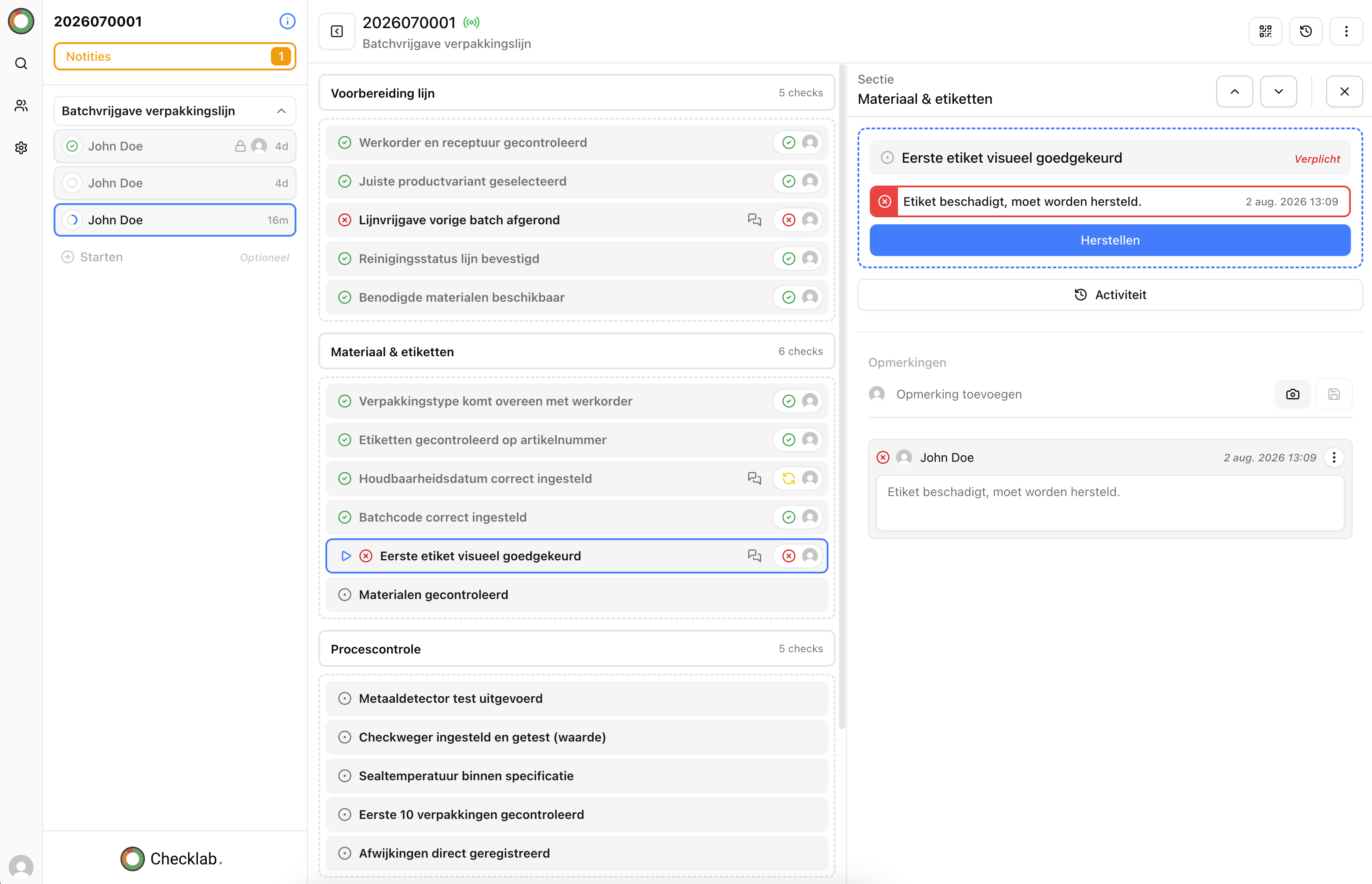
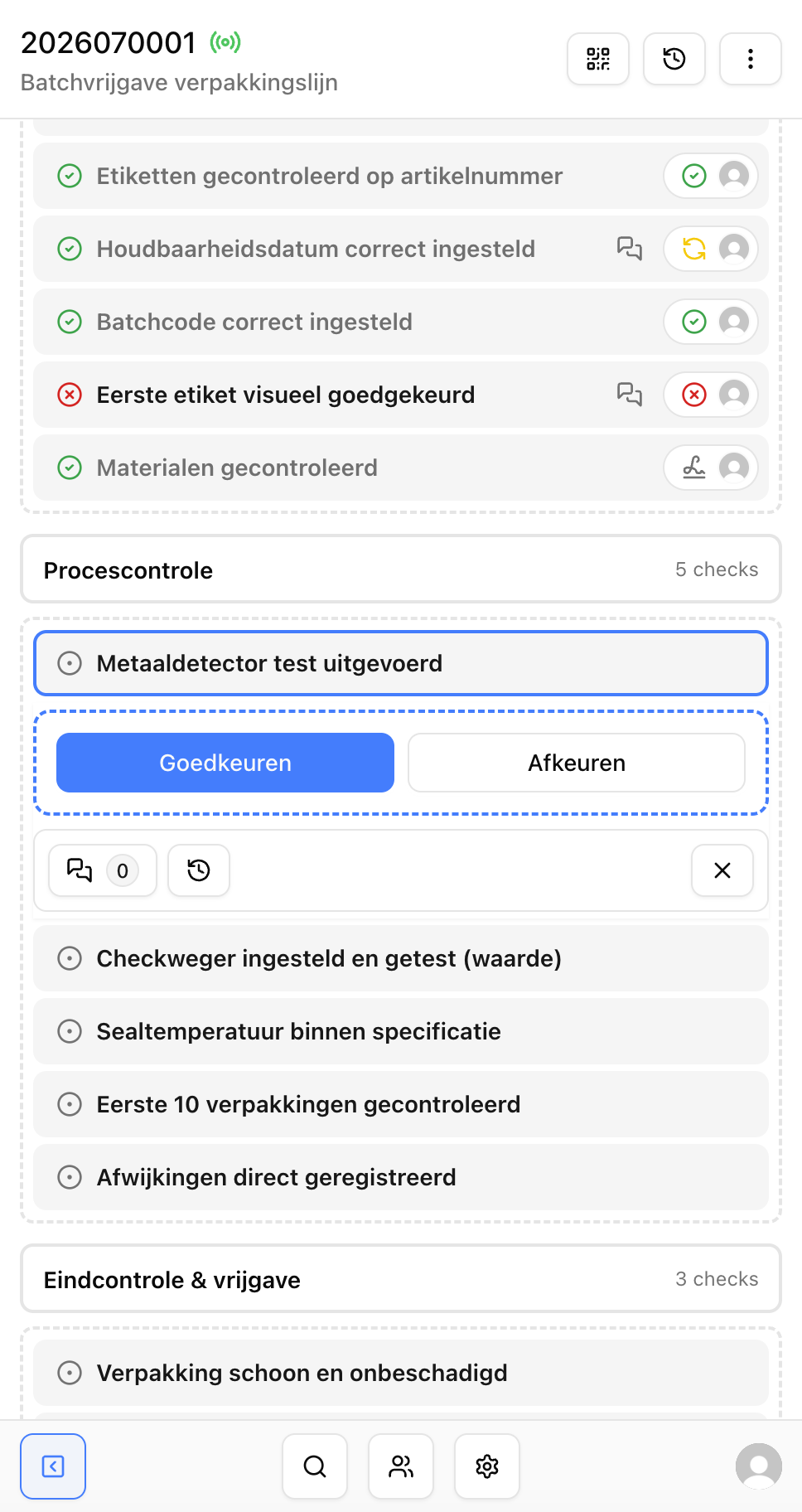
Supplier quality relies on the same core mechanisms as other quality processes: detect a deviation, capture its context, assign responsibility, perform actions, collect evidence and verify effectiveness.
A practical digital workflow looks like this:
- An incoming inspection detects a nonconforming component.
- The QMS creates a supplier nonconformity and links the supplier, delivery and inspection result.
- Containment determines which stock or production must be blocked.
- The supplier provides a root-cause analysis and corrective action.
- Internal CAPA tasks are completed where needed.
- An independent verification determines whether the action was genuinely effective.
- The deviation and its outcome contribute to the next supplier evaluation.
The difference from a spreadsheet is not simply that information is stored digitally. The system prevents a deviation from disappearing administratively before the required actions, decisions and verifications have been completed.
Six questions for your next quality meeting
- Which suppliers can directly affect product safety or regulatory conformity?
- When did we last verify the physical product from those suppliers independently?
- Do suppliers know which changes they must report in advance?
- Are supplier NCRs systematically analysed for recurrence and trends?
- Does poor supplier performance automatically affect our inspection frequency or approval status?
- Could we quickly demonstrate the basis for supplier approval and product release during a market surveillance enquiry?
Conclusion
The European testing campaign reveals an uncomfortable reality: a complete file is not automatically the same as a conforming product.
Supplier quality therefore requires more than collecting certificates. It calls for risk-based qualification, controlled changes, appropriate verification, effective incoming inspection, visible supplier performance and a closed NC/CAPA cycle.
The principle: do not trust suppliers less, but organise the evidence better. A strong QMS turns supplier trust into a demonstrably controlled process.
Curious how Checklab can help you manage supplier deviations, actions and evidence in one place? Discover how a practical digital workflow can give you more control over supplier quality and compliance. Request a demo.