August 28, 2026
How to achieve and maintain ISO 9001 certification: a practical guide
Want to achieve or maintain ISO 9001 certification? Learn which processes, records and improvement activities support a working quality management system and successful audits.

Achieving ISO 9001 certification is not just about writing a quality manual. The standard requires a quality management system (QMS) that fits your organisation, is used in daily work and demonstrably improves over time.
This guide explains a practical approach to achieving ISO 9001 and maintaining certification through effective processes, reliable records and continuous improvement.
What is ISO 9001?
ISO 9001 is the international standard for quality management systems. It helps organisations control their processes, meet customer expectations and improve consistently. Certification is voluntary, but an independent certificate can give customers and other stakeholders confidence in how quality is managed.
The current edition is ISO 9001:2015. Always check the applicable edition and transition requirements with your certification body.
ISO 9001 does not prescribe how a specific product or service must be delivered. It asks you to understand your organisation, define relevant processes and responsibilities, manage risks, monitor performance and improve your QMS.
Seven steps to ISO 9001 certification
1. Define your organisation’s context and scope
Describe what your organisation does, who your customers are and which processes are included in the QMS. A well-defined scope keeps the system focused and prevents unnecessary documentation.
2. Map processes and responsibilities
Make the flow of work visible, from sales and purchasing to planning, delivery, inspection and service. Define the purpose, inputs, outputs, owner, risks and measures for each key process.
3. Translate requirements into practical controls
Capture customer, legal and regulatory requirements, then turn them into clear checks. Digital checklists can help verify an order, installation, service visit or final product against agreed criteria.
4. Manage risks and opportunities
Focus on risks that can significantly affect quality. Proportionate controls might include supplier reviews, calibration, release checks or mandatory safety inspections. Track whether those controls are effective.
5. Create evidence that processes are followed
Auditors need evidence, not only descriptions. Keep reliable records of inspections, training, supplier evaluations, complaints, nonconformities, corrective actions, internal audits and management reviews.
6. Run internal audits
Check whether processes work in practice. Talk to employees, review records and follow work from start to finish. Record findings clearly and assign corrective actions with owners and deadlines.
7. Prepare for the certification audit
Choose an independent certification body and ensure your scope, records and open actions are clear. Certification is not a one-time finish line: surveillance audits and recertification make a functioning QMS essential.
How to maintain ISO 9001 certification
Keep quality management part of normal operations. Review open actions regularly, keep documents current, analyse complaints and nonconformities, involve employees and verify that corrective actions are effective.
Avoid relying on last-minute records before an audit. Real-time registration gives you more trustworthy evidence and better insight into recurring risks.
How digital checklists support ISO 9001
A digital QMS or checklist platform does not replace the standard or professional judgement. It does make daily execution easier to control and prove.
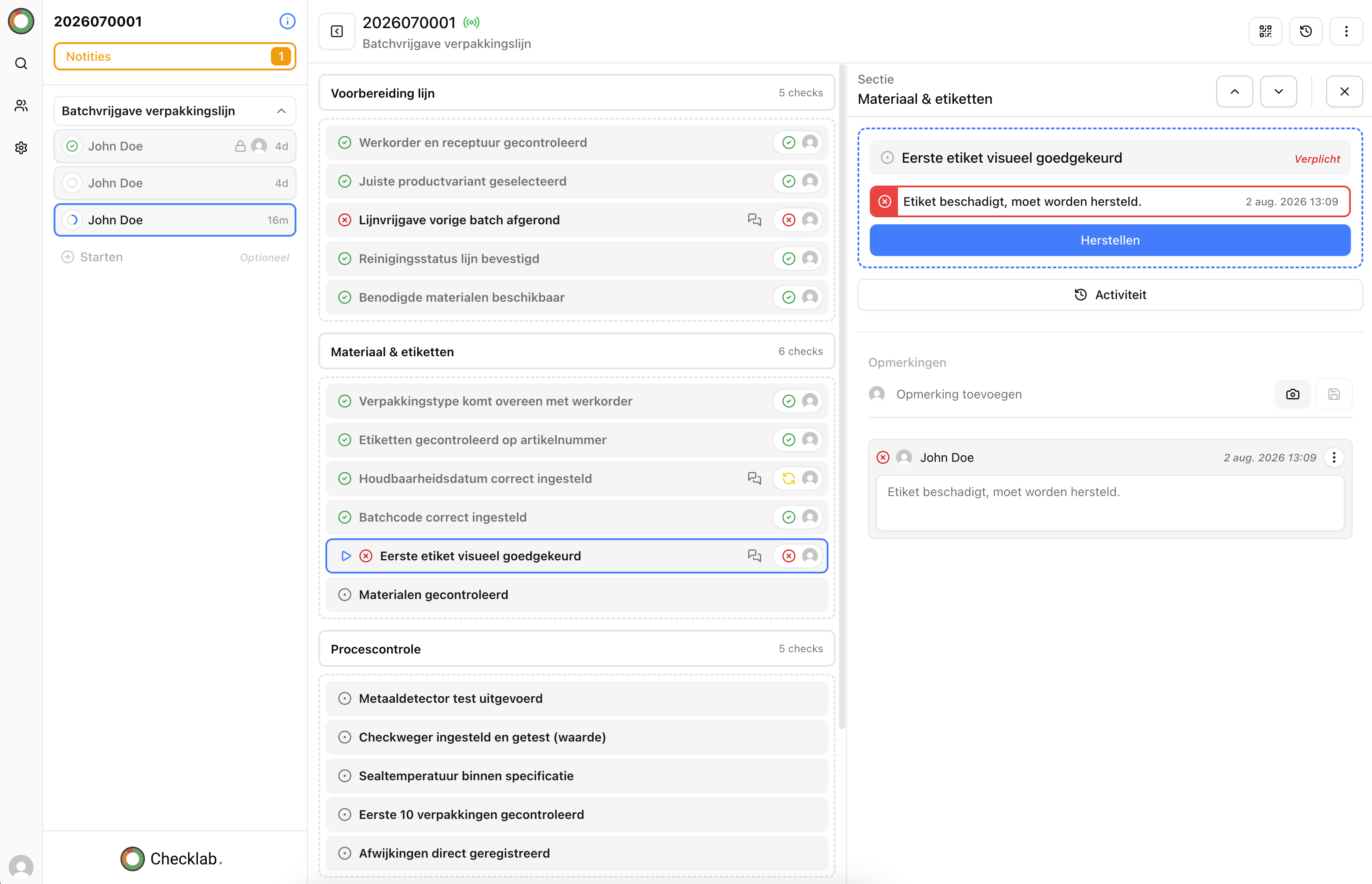
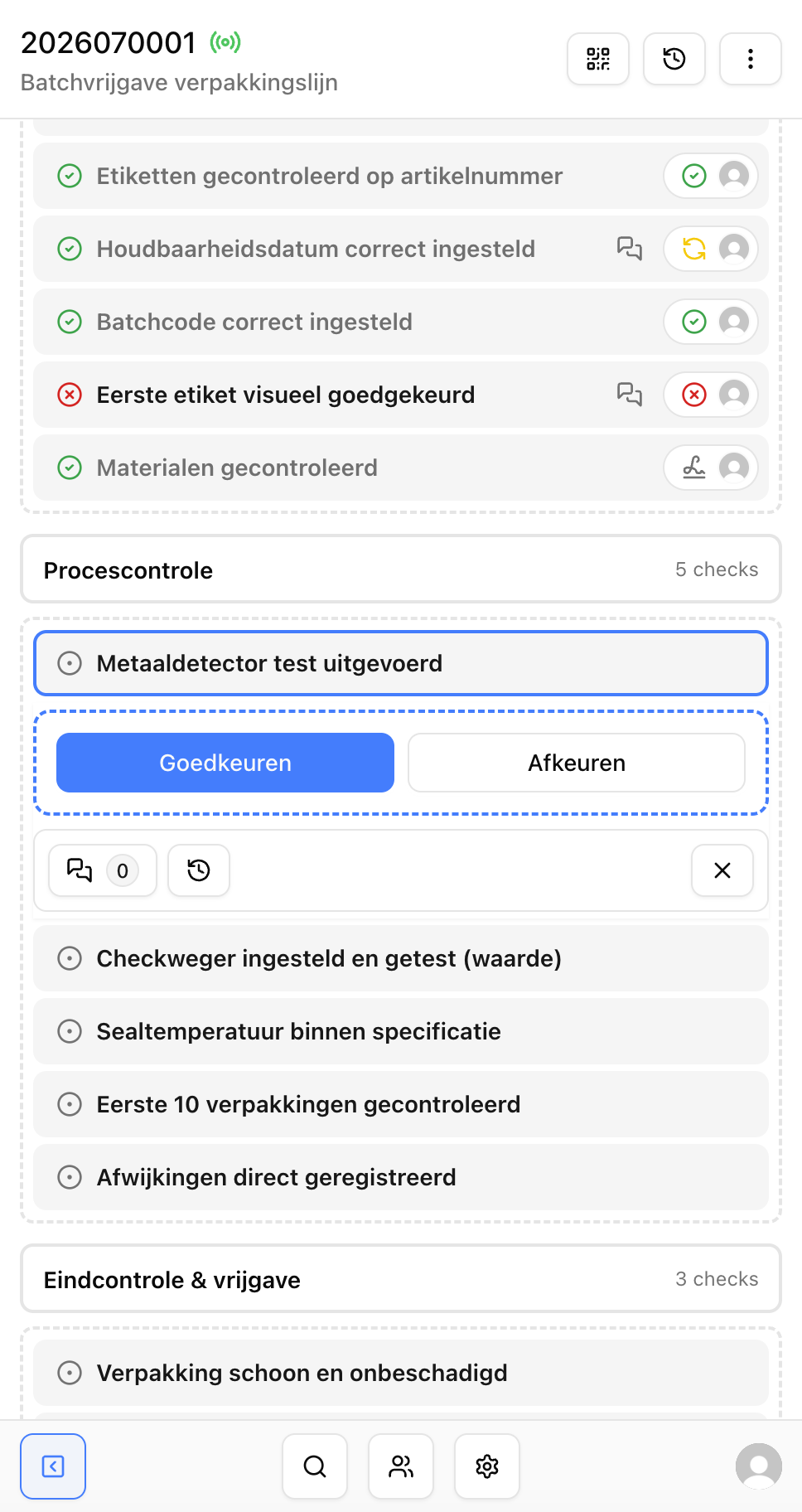
With Checklab, teams can create checklists for inspections and audits, register deviations and complaints, assign actions with deadlines, attach photos and analyse results and trends in one central place.
Conclusion
The strongest ISO 9001 systems are practical, used every day and continuously improved. Start with your processes, turn requirements into clear checks, keep reliable records and use findings to improve.
Request a free demo to see how Checklab can support your quality checks, audits and improvement actions.