December 1, 2025
From complaint to improvement: smart incident registration
Complaints and incidents are valuable signals. Discover how structured registration helps solve problems and prevent them from happening again.
Complaints and incidents can never be completely avoided in production and service processes. A product may deviate from the requirements, an inspection may be missed, or an internal error may affect a customer.
Although a report is never good news, it is also valuable. It shows where a process is vulnerable. The difference between a recurring problem and an organization that improves continuously often comes down to how well reports are recorded and followed up.
With a structured checklist, every complaint or incident can become a useful opportunity to learn.
Why structured registration matters
Without a clear process, reports often end up in separate emails, Excel files, WhatsApp conversations, or handwritten notes. Sometimes they are not recorded at all.
This makes it difficult to answer important questions:
- What exactly happened?
- How often does the problem occur?
- Who is responsible for the follow-up?
- Which action has already been taken?
- Has the problem actually been resolved?
A central record gives everyone access to the same information. Employees know what is happening, responsible owners can see which actions are still open, and managers can identify recurring risks earlier.
This is important for daily operations, as well as for quality checks, audits, and compliance.
What should a complaint or incident checklist include?
A good checklist captures enough information to understand and follow up on an incident without making the reporting process unnecessarily complicated.
1. Who submitted the report?
Record who discovered the problem and when the report was created. This makes it clear who can provide additional information and creates a reliable timeline.
2. What type of report is it?
Use predefined categories for product deviations, customer complaints, safety incidents, process errors, or missed inspections. This makes it easier to filter reports and identify trends later.
3. What exactly happened?
A clear description prevents important details from being lost. Where relevant, ask for the product, location, batch, order, or process involved in the report.
4. What immediate action was taken?
Some situations require immediate action. This could mean blocking a product, informing a customer, stopping a machine, or carrying out additional inspections. Recording the first action shows how the risk was contained.
5. What was the likely cause?
A lasting solution requires looking beyond the visible problem. Was the instruction unclear? Was a control missing? Was a component defective? Or was the procedure not followed correctly?
A checklist can guide employees through this root cause analysis step by step.
6. Which corrective and preventive actions are needed?
Record what needs to happen to solve the current problem and which action will prevent it from happening again. This could include updating a work instruction, providing additional training, making a technical change, or adding another control.
7. Who owns the action and when will it be reviewed?
Every action needs an owner and a deadline. Schedule a review moment to check whether the measure was effective.
This turns an isolated report into a concrete improvement process.
Move from recording to learning
Recording an incident is only the first step. The real value appears when reports are analyzed regularly.
Look for patterns such as:
- recurring complaints;
- incidents by location or department;
- causes that appear repeatedly;
- actions that are often completed late;
- processes with relatively high numbers of deviations.
These patterns show where structural improvement is needed. As a result, an organization can do more than react to what went wrong. It can prevent the same problems from happening again.
This can lead to:
- fewer process errors;
- lower operational risks;
- better procedures and work instructions;
- more targeted employee training;
- faster and better-informed decisions.
Keep the process practical for employees
A complaint or incident process only works when employees actually use it. A form that is too long, too complicated, or unavailable where the incident occurs is more likely to be skipped.
Keep the checklist practical:
- use clear language;
- make important fields mandatory;
- use predefined categories wherever possible;
- only show follow-up questions when they are relevant;
- make it easy to add photos and attachments;
- assign actions directly to an owner.
The easier it is to report an incident, the more complete and reliable the information will be.
How digitalization strengthens the process
Paper forms and separate spreadsheets may seem simple at first, but follow-up and analysis quickly become difficult. Information becomes scattered, versions differ, and compiling reports takes time.
With a digital QMS, reports are stored centrally. You can automatically create actions, monitor deadlines, add files, and track the status of every report.
This makes it easier to:
- monitor open actions;
- analyze trends;
- create reports;
- retrieve information;
- support audit and compliance requirements.
How Checklab helps
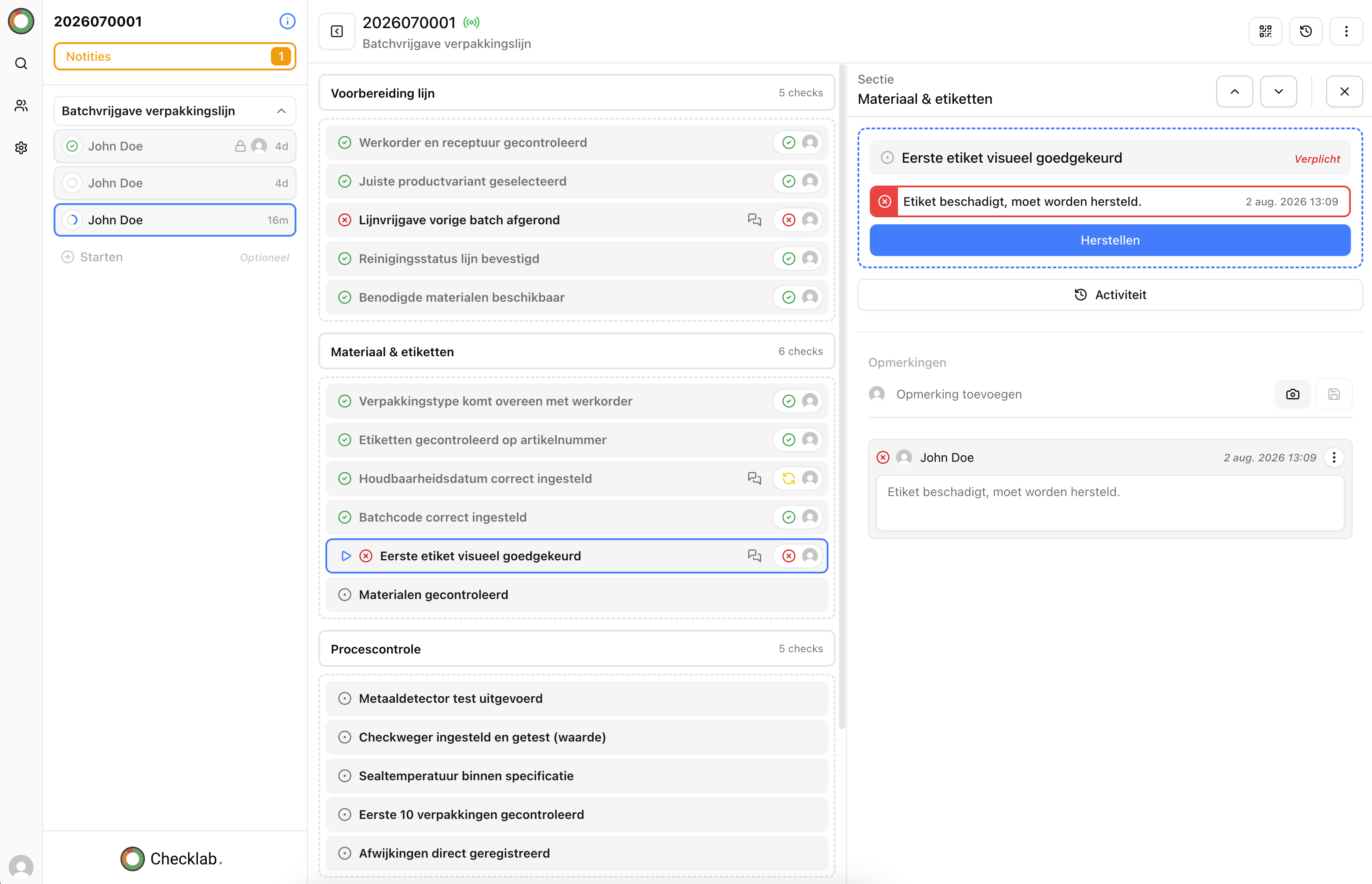
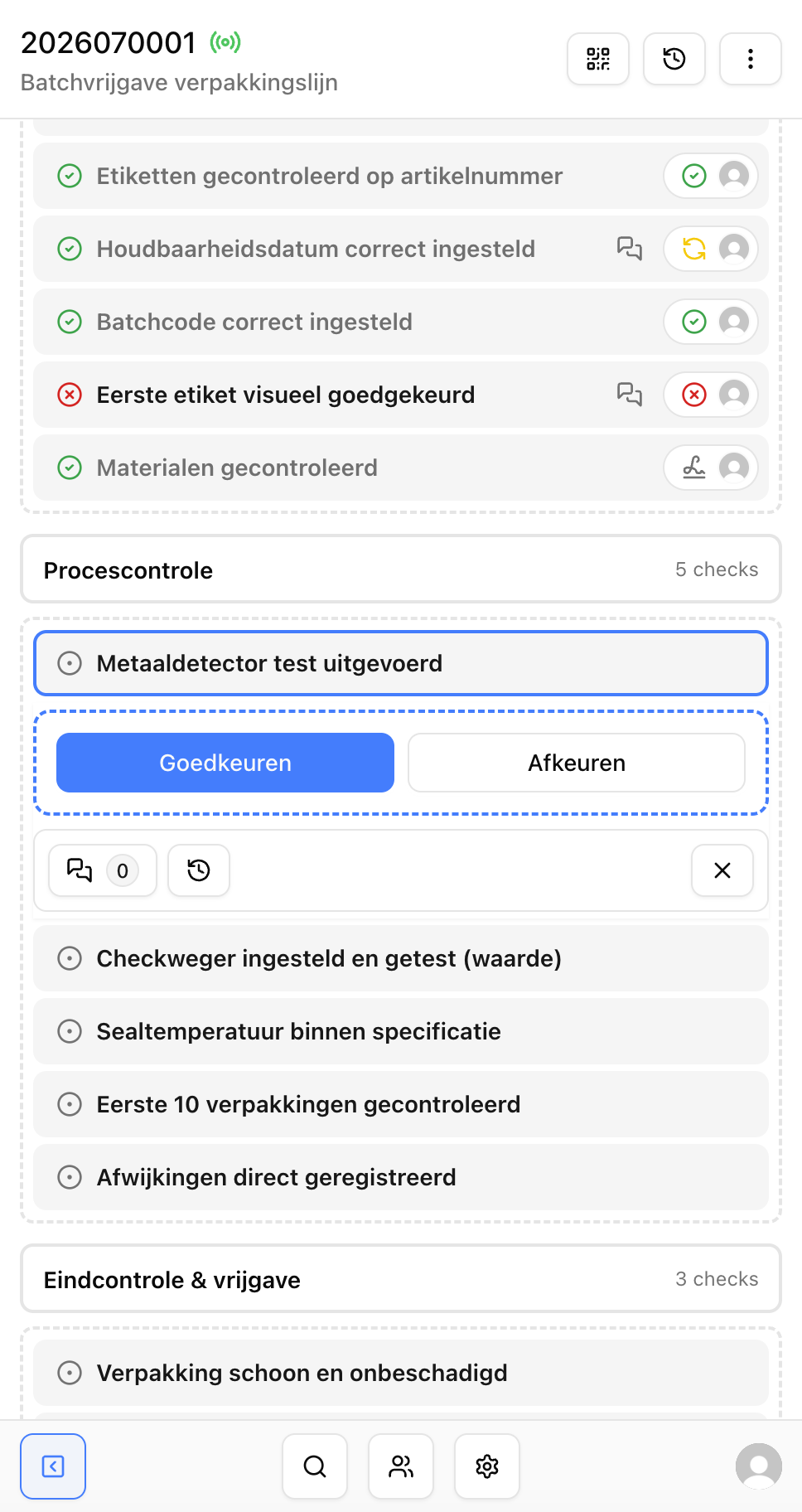
With Checklab, you can build practical checklists for complaints, incidents, and deviations. You decide which information is required, which follow-up questions appear, and which actions are created automatically.
A report can be linked directly to an owner, deadline, photo, root cause analysis, and corrective action. All information stays together, so there is no need to search through multiple systems.
This means complaints and incidents are not only recorded, but also actively followed up and analyzed.
Conclusion
A complaint or incident does not have to remain just a problem. With the right registration process, every report becomes an opportunity to strengthen your processes.
The foundation is a clear checklist with the right questions, predefined answer options, responsible owners, and follow-up actions. By analyzing reports centrally, you can identify patterns and prevent the same problems from recurring.
Want to see how Checklab can support your complaint, incident, and improvement processes? Contact us to schedule a demonstration.